
Digital Transformation, Customer Experience
Regulation is rarely the real blocker
In discussions about digital transformation within regulated industries, regulation is often seen as the immovable obstacle. Yet the participants in these roundtables painted a more nuanced picture.
When asked what prevents organisations from turning mandatory communications into strategic advantage, the answers were strikingly consistent: legacy systems, data silos, slow decision-making processes, risk-averse leadership cultures and internal complexity.
Very few participants suggested that regulation itself was the dominant barrier.
The discussions suggested that the biggest barriers often sit inside organisations rather than in regulation itself. Participants frequently pointed to legacy systems, approval processes, and slow decision-making as the factors that stall progress. This reflects a wider pattern identified in our research, where fragmented decision-making, legacy technology and internal capability gaps emerged as key barriers to transformation. In many cases the challenge is not understanding the rules themselves, but coordinating people, systems and processes well enough to act within them.
Where that confidence exists – often supported by clear board-level direction and strong compliance leadership – progress tends to accelerate.

Mandatory communications are becoming strategic touchpoints
Another theme that emerged strongly across the roundtables was a shift in how organisations think about regulated communications themselves.
Historically, messages like statements, renewal notices, policy updates and regulatory notifications have been treated as operational outputs. Their primary purpose was compliance: to ensure that customers received information required by law or regulation.
But our participants increasingly see these communications as something more valuable.
Participants repeatedly described regulated communications as an opportunity, one calling it a “golden conversation” with the customer. Unlike marketing emails or promotional messages, these communications carry a level of inherent trust and attention. Customers are far more likely to read them, engage with them and act on them.
When designed well, regulated communications can reinforce brand credibility, improve clarity and understanding, guide customers through important decisions and even highlight relevant services. They can also generate valuable data and insight about customer behaviour and engagement.
In other words, the very messages that organisations are obliged to send may be among the most powerful interactions they have with their customers.
The strategic challenge is to stop treating those communications as static compliance documents and start designing them as purposeful customer experiences.

Trust sits at the centre of the debate
Trust emerged repeatedly throughout the discussions, but not always in the ways one might expect.
For some participants, trust is related to the security of digital channels and the risks associated with cybercrime and fraud. Concerns around phishing and impersonation attacks were frequently raised, particularly in sectors where customers are already cautious about unexpected emails or messages.
Others spoke about trust in the organisation itself: the credibility of communications, the clarity of messaging and the consistency of experience across channels.
There was also an internal dimension. Several attendees highlighted the importance of trust between teams inside organisations. Digital transformation in customer communications often requires collaboration between departments that traditionally operate separately; technology, compliance, operations and marketing among them.
Our participants also pointed out that poor digital design can erode trust just as easily as security issues. Confusing interfaces, unclear messaging or inconsistent authentication processes can undermine customer confidence, even when the underlying systems are secure.
Trust in digital communication is built not only through technology, but through thoughtful design and clear communication.

Persistent myths still shape decision-making
One of the most revealing parts of the roundtable discussions came when attendees were asked to identify myths about digital transformation in regulated communications.
Several familiar assumptions surfaced quickly.
One recurring belief is that paper communication is inherently safer than digital alternatives. While paper certainly avoids certain types of cyber risk, participants noted that it also introduces other vulnerabilities, from lost documents to delayed delivery. More importantly, the perception of safety can sometimes obscure the inefficiencies and costs associated with paper-based processes.
Another commonly challenged assumption was that age determines digital capability. Participants were quick to point out that customer behaviour is far more nuanced. Digital adoption varies widely across demographics, but it is shaped as much by usability and trust as by age.
There was also scepticism around the idea that personalisation and compliance cannot coexist. Some tables argued that the two are not mutually exclusive, provided organisations have the right data governance and design frameworks in place.
Finally, many challenged the belief that transformation must be a large, expensive, “big bang” initiative. Taking small steps, using hybrid communication strategies and targeted digital enhancements can often deliver meaningful benefits without requiring wholesale system overhauls.

The role of data and organisational alignment
While technology was not seen as the primary obstacle, data-related challenges featured prominently in many discussions.
Participants highlighted issues ranging from fragmented customer records to limited insight into customer journeys. And noted that organisations often underestimate how much progress can be made with the data they already possess. The challenge is less about collecting more information and more about integrating and interpreting existing data effectively.
This supports our wider research, where 95% of organisations said they need to improve how analytics informs communication strategy, often because data remains fragmented across legacy systems and disconnected channels.
Organisational alignment also emerged as a crucial factor. Customer communication strategies often sit across multiple departments, each with its own priorities and performance metrics.
A shift from obligation to opportunity
Across the eleven roundtables, one message came through clearly. Regulated organisations are increasingly recognising that customer communications can be more than a compliance exercise. When designed thoughtfully, they can reduce cost to serve, improve customer experience, strengthen brand reputation and generate valuable insight.
They can also support broader strategic goals, from digital adoption to operational efficiency. The challenge now is not simply technological. It’s organisational and cultural.
It requires leadership teams to rethink the role of communications within the business, to align internal stakeholders around shared outcomes and to challenge long-held assumptions about what regulation allows or prevents.
The conversation continues
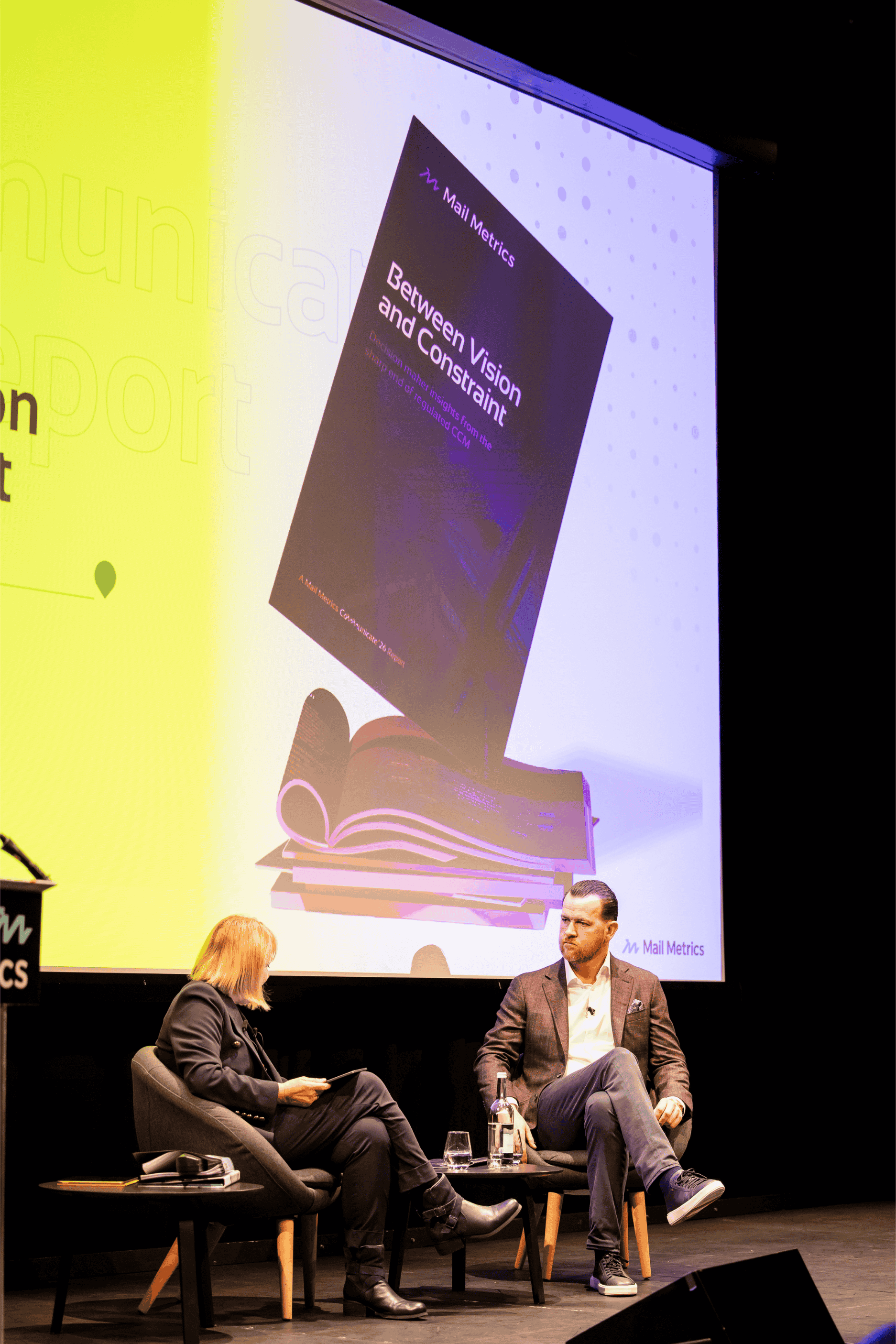
The discussions at Communicate 25 highlighted both the progress that has been made and the work that still lies ahead.
There is clear appetite across regulated sectors to move beyond obligation and treat customer communications as strategic assets. But achieving that shift requires confidence in digital channels, regulatory interpretation and in the ability of organisations to align internally around a common goal.
The conversations we heard suggest that many organisations are already on that journey.
The question now is how quickly they will move from recognising the opportunity to realising it.
Communicate 26 will take place on 12 November 2026. Keep an eye on our events page for more details.
.png?height=2000&name=shape%20(2).png)
Contact us
Get in touch with one of our solution consultants to discuss your regulated communication requirements.